

Amazon Expands Partnered Carrier Program to Dangerous Goods (Hazmat) Shipments
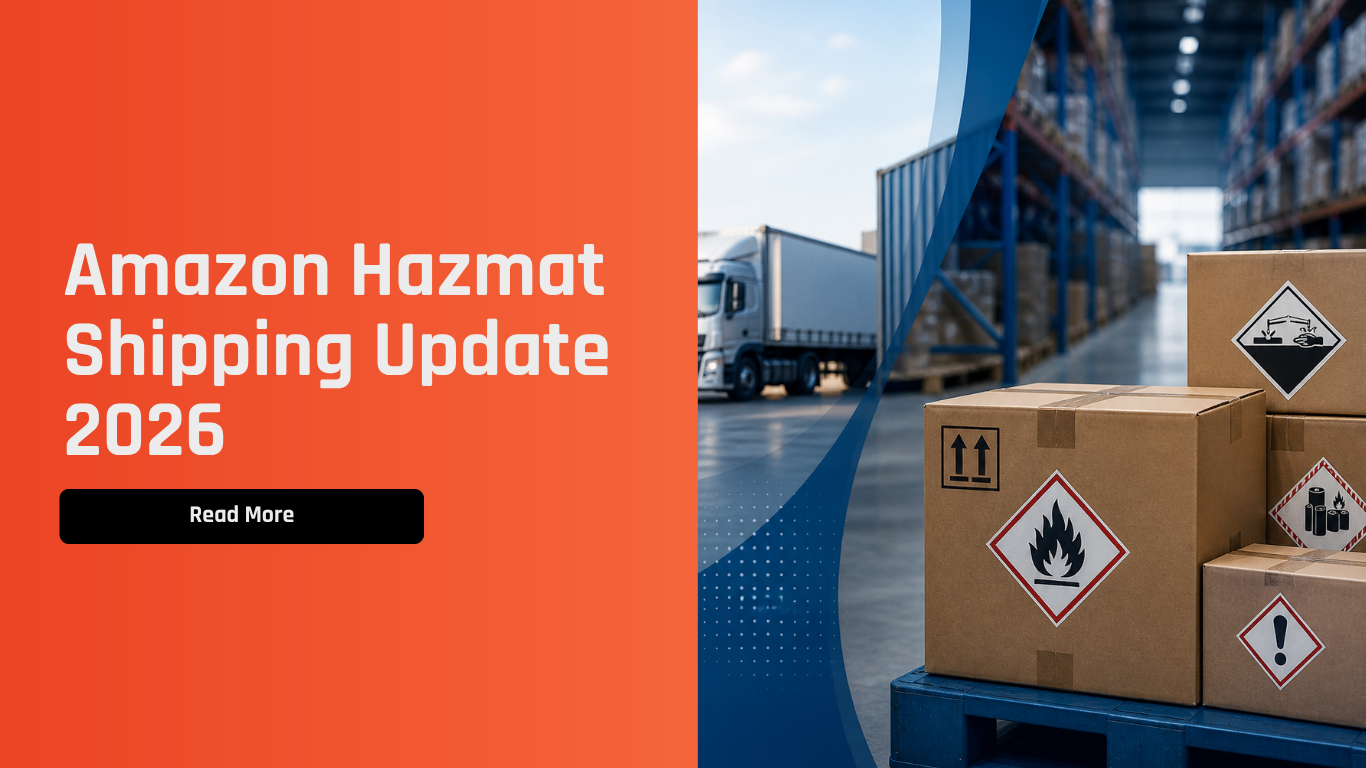
Amazon has announced a significant update to its fulfillment infrastructure: as of April 30, 2026, sellers can now ship FBA-eligible dangerous goods (hazmat) through the Partnered Carrier program within the United States.
This marks a major shift from previous limitations, where the program only supported select lithium battery products. With this expansion, sellers handling regulated inventory now have access to a more streamlined and centralized shipping process.
For brands operating in categories like electronics, personal care, household goods, and automotive products, this update has direct implications for logistics efficiency, compliance, and operational control.
What Has Changed?
Previously, shipping dangerous goods to Amazon fulfillment centers required:
Coordinating with specialized third-party carriers
Managing multiple shipping workflows
Navigating stricter documentation processes independently
Now, Amazon has expanded its Partnered Carrier program to support:
All FBA-eligible dangerous goods (hazmat)
Multiple shipping modes including:
Small Parcel Delivery (SPD)
Less Than Truckload (LTL)
Full Truckload (FTL)
Intermodal freight
This means sellers can now manage hazmat shipments within the same “Send to Amazon” workflow used for standard inventory.
Why This Matters for Sellers
This update is not just operational; it directly impacts how efficiently sellers can scale regulated products.
A. Simplified Logistics
Using Amazon’s partnered carriers removes the need to coordinate with multiple external logistics providers. This reduces:
Manual errors
Communication delays
Shipment fragmentation
B. Centralized Workflow
Sellers can now send both dangerous and non-dangerous goods in a single shipment planning flow, improving operational clarity.
C. Potential Cost and Time Efficiency
While costs will still vary, Amazon’s partnered carrier rates are often competitive due to volume advantages. More importantly, the time saved in coordination can significantly improve operational speed.
What Qualifies as Dangerous Goods (Hazmat)?
Dangerous goods include products that may pose risks during storage or transportation. Common examples include:
Lithium batteries and battery-powered devices
Flammable liquids (e.g., certain cosmetics, cleaning agents)
Aerosols and pressurized containers
Chemicals and solvents
However, not all hazmat products are automatically eligible for FBA or partnered shipping.
Sellers must:
Ensure products are properly classified
Confirm eligibility through Amazon’s dangerous goods identification system
Maintain accurate product data and safety documentation
How to Ship Dangerous Goods Using the Partnered Carrier Program
Amazon has integrated hazmat shipping directly into the existing shipment creation process:
Go to Send to Amazon in Seller Central
Select inventory (you can include both hazmat and non-hazmat items)
Choose Amazon Partnered Carrier during shipping setup
Complete the workflow as instructed
The key difference is not the process; but the eligibility and flexibility now available within it.
Operational Considerations Sellers Must Not Ignore
While the process is now simpler, compliance requirements have not been relaxed.
A. Accurate Product Classification Is Critical
Misclassified dangerous goods can lead to:
Shipment rejections
Listing suppression
Account-level compliance warnings
B. Packaging and Labeling Requirements Still Apply
Hazmat shipments must meet strict standards for:
Packaging integrity
Hazard labeling
Documentation
C. Inventory Planning Becomes More Important
Because hazmat inventory may require additional handling, delays can still occur if:
Documentation is incomplete
Product classification is incorrect
Pro Tips from XtendedGH
From an operational standpoint, here is where most sellers struggle—and how to avoid it:
1. Validate Hazard Classification Before Shipment Creation
Do not wait until shipment planning to confirm hazmat status. Errors at this stage can delay the entire process.
2. Align Listing Data with Compliance Requirements
Backend product data (attributes, material composition, battery info) must match Amazon’s hazmat classification system.
3. Avoid Mixing Unverified Inventory
While Amazon allows mixed shipments, combining verified and unverified hazmat items can complicate processing.
4. Monitor Shipment Status Closely
Even with partnered carriers, hazmat shipments may require additional checks. Stay proactive.
How XtendedGH Supports Sellers in This Transition
This update improves logistics—but it also increases the importance of backend accuracy and compliance alignment.
We support sellers by ensuring:
Correct product classification data is reflected in listings
Backend attributes match hazmat requirements
Listings remain active and compliant during shipment cycles
Catalog inconsistencies are resolved before they cause delays
In short: we make sure your backend is clean and compliant so your shipments move without avoidable issues.
Get in Touch
If you're managing hazmat inventory and want to avoid classification errors, listing issues, or shipment delays, now is the time to tighten your backend operations.
XtendedGH supports sellers by ensuring their catalog and product data are accurate, compliant, and ready for smooth FBA processing. Book a session with our team, or reach out at sales@xtendedgh.com. Let us handle the backend while you focus on scaling your operations.
Final Thoughts
Amazon’s expansion of the Partnered Carrier program to include dangerous goods is a meaningful step toward operational simplification for sellers handling regulated inventory.
However, while logistics have become easier, compliance expectations remain high.
Sellers who benefit most from this update will be those who:
Maintain accurate backend product data
Ensure proper classification before shipping
Align catalog structure with operational workflows
Those who overlook these areas risk delays, compliance issues, and lost sales opportunities.
Frequently Asked Questions (FAQ)
Can I mix dangerous and non-dangerous goods in one shipment?
Yes, Amazon allows mixed shipments within the same workflow, but proper classification is still required.
Do I still need special hazmat carriers?
In many cases, no. The Partnered Carrier Program now supports eligible dangerous goods.
Will this reduce shipping costs?
It can improve cost predictability, but actual savings depend on shipment size, mode, and location.
What happens if my product is misclassified?
Amazon may delay, reject, or reclassify your shipment, which can lead to additional fees and disruptions.
Is this available internationally?
No, this update currently applies to domestic U.S. shipments only.