

TikTok Shop Cracks Down on GLP-1 References: What Sellers Must Change Now
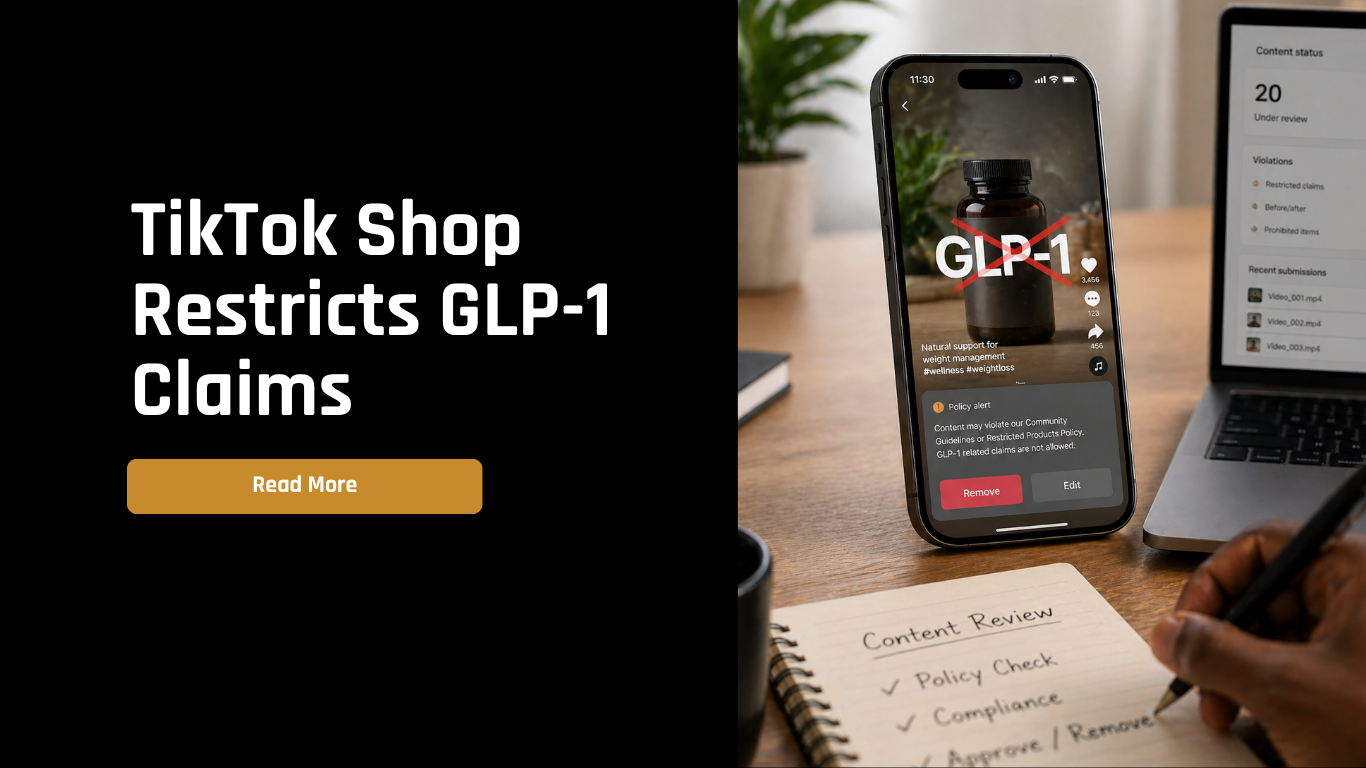
As of April 2026, TikTok Shop has made a decisive move. GLP-1 references are now clearly restricted in product marketing and creator content.
This update directly targets a growing trend where sellers and creators position products as alternatives to prescription weight-loss medications. TikTok has clarified that such comparisons, whether explicit or implied, are not allowed.
For sellers in supplements, wellness, beauty, and fitness categories, this is a critical shift. It affects not just what you sell, but how you communicate value to customers.
While this update sits within the broader weight management policy, the real focus is clear. Sellers can no longer rely on GLP-1 comparisons to drive conversions.
What Exactly Is Restricted About GLP-1?
GLP-1 medications are prescription treatments used for weight management and diabetes. Because they are medically regulated, any comparison between these drugs and general consumer products is considered misleading.
Sellers and creators must not:
Claim a product contains GLP-1
Suggest it is activated by GLP-1
Say it works like GLP-1 medications
Position it as an alternative to prescription drugs
Indirect phrasing, such as “similar to GLP-1” or “same effect as GLP-1 injections” can also trigger violations.
TikTok is not only evaluating wording but also the intent behind the message.
Why TikTok Is Targeting GLP-1 Specifically
GLP-1 has become one of the most talked-about topics in weight loss and wellness. TikTok’s concern is rooted in three key areas.
First, medical misrepresentation. Comparing consumer products to prescription drugs can mislead buyers.
Second, unrealistic expectations. GLP-1 medications are clinically monitored, and suggesting similar outcomes from general products is problematic.
Third, platform responsibility. Allowing such claims exposes the platform to regulatory and reputational risks.
This update draws a clear boundary between medical treatment and consumer wellness products.
How This Connects to the Broader Weight Claims Policy
The GLP-1 restriction is part of a wider policy on weight management claims.
Weight-related claims include messaging that suggests:
Weight loss or gain
Fat reduction
Body transformation
Muscle gain
These are restricted because they can mislead consumers, encourage unhealthy behaviors, and create unrealistic expectations.
Examples of prohibited claims:
“Lose 10 pounds in a week”
“Burn fat instantly”
“Lose weight without diet or exercise”
The GLP-1 update removes a common workaround where sellers used medical comparisons to support these types of claims.
Where Most Violations Will Occur
Many sellers assume compliance issues only exist in product listings. In practice, most violations occur in content.
Common risk areas include:
Creator or affiliate videos
TikTok captions
Live selling sessions
Testimonials and hashtags
A single creator stating that a product works like GLP-1 can put the entire listing at risk, even if the product page itself is compliant.
What Happens If You Ignore This Update?
With enforcement now active, sellers may face:
Content removal
Product listing suppression
Reduced visibility in recommendations
Decline in Shop Performance Score
Account warnings or restrictions
Reduced visibility directly impacts sales, especially on a discovery-driven platform like TikTok Shop.
What Sellers Should Do Instead
The goal is not to stop selling but to reposition products in a compliant way.
Sellers should focus on:
General wellness benefits
Lifestyle support
Realistic and balanced outcomes
Avoid:
Medical comparisons
Claims suggesting rapid or guaranteed results
For example, instead of saying a product works like GLP-1, focus on how it supports overall wellness or daily routines, where appropriate and compliant.
Pro Tips from XtendedGH
From a backend operations perspective, compliance should be structured into your processes.
1. Standardize Product Messaging
Create approved versions of product titles and descriptions to ensure consistency.
2. Build a Review Workflow
Ensure all product updates and campaigns are reviewed before going live.
3. Monitor Creator Content
Regularly check how affiliates are presenting your products.
4. Maintain a Restricted Terms List
Include high-risk terms such as GLP-1 and fat burning.
5. Ensure Consistency Across Channels
Misalignment between listings and content is a common trigger for enforcement.
How XtendedGH Can Help
XtendedGH provides backend operations support to help sellers maintain structure and consistency.
We support businesses by:
Organizing and standardizing product listings
Supporting internal workflows for reviewing and updating product information
Monitoring backend performance and identifying potential risks
Maintaining consistency across product data and messaging
Helping teams stay structured as operations scale
Our focus is on ensuring backend systems support compliance and operational efficiency.
Get in Touch
If your business is experiencing challenges with inconsistent product messaging, compliance risks, or backend inefficiencies, it may be time to strengthen your operations.
XtendedGH supports sellers with structured backend systems designed to keep operations organized and aligned with marketplace requirements. Book a session with our team, or reach out at sales@xtendedgh.com. Let us handle the backend while you focus on growing your brand.
Final Takeaway
This update reinforces a broader shift in TikTok Shop. Sellers can no longer rely on trending medical narratives such as GLP-1 to position products. Instead, growth depends on clear, responsible, and compliant messaging supported by strong backend processes.
Sellers who adapt will maintain visibility and scale sustainably. Those who do not risk losing momentum in an increasingly regulated marketplace.